
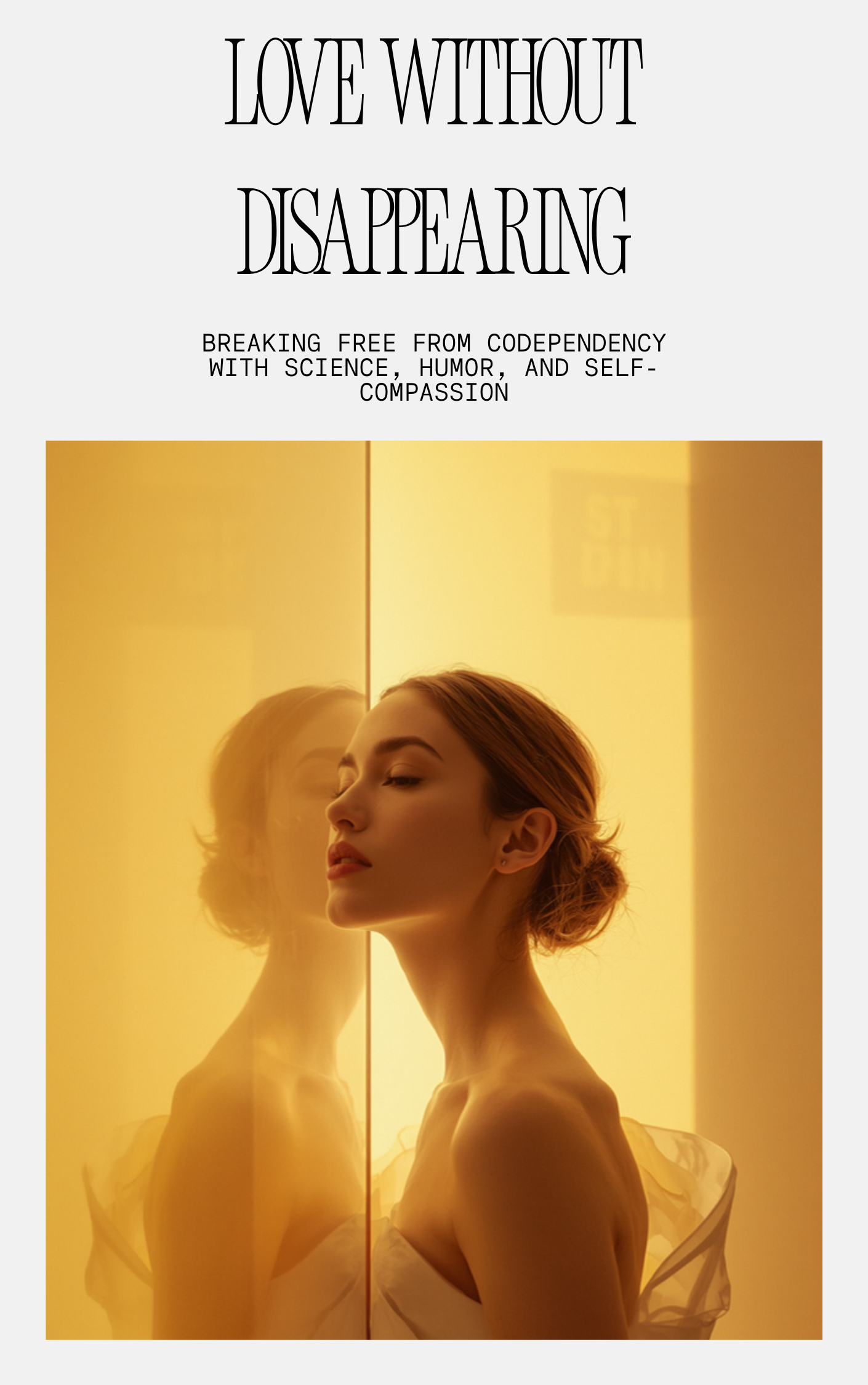
Love Without Disappearing
Breaking Free from Codependency — Without Losing Your Ability to Love
You are the person everyone calls in a crisis.
You are the friend who drops everything. The partner who gives more than you receive and tells yourself it is fine. The colleague who absorbs everyone else's stress. The family member who manages every emotion in the room except your own — because your own got buried so long ago you are not entirely sure they still exist.
You are generous, empathetic, devoted, and exhausted. And underneath the exhaustion, there is a truth you have not said out loud yet: you do not know where you end and other people begin.
You call it love. It is not love. It is disappearing.
Codependency is not a word that describes how much you care. It is a word that describes what you sacrifice in order to care — your identity, your preferences, your needs, your voice, your boundaries, and eventually your self. You did not choose this. It was installed, early and deeply, by an environment that taught you a simple, devastating equation: your worth equals your usefulness. Be needed or be nothing.
That equation ran your childhood. It is running your adult life. And it is the reason every relationship you enter follows the same exhausting pattern: you give everything, they take everything, and when the giving runs out, they leave — or you collapse — and you start the cycle again with someone new, wondering why love always costs you yourself.
Love Without Disappearing is the book that breaks the cycle.
Not by teaching you to love less. By teaching you to love without erasing yourself in the process. Because the secret nobody tells codependent people is this: the love you have been offering is not actually intimacy. It is enmeshment — two people fused so tightly that neither can breathe. Real intimacy requires two whole people. And you cannot be whole if you have given every piece of yourself away.
Inside this book you will find:
The neuroscience of codependency — why losing yourself in someone else feels like love and is actually your attachment system running a survival program from childhood. Your brain bonded to caregivers by monitoring their needs, anticipating their moods, and suppressing your own desires to maintain the connection. That strategy kept you safe at six. At thirty-six, it is destroying your relationships, your health, and your sense of self.
The attachment patterns chapter — the three attachment styles (secure, anxious, avoidant) and how they interact in relationships. If you are anxiously attached, you chase. If your partner is avoidant, they withdraw. The more you chase, the more they withdraw. The more they withdraw, the more you chase. This is not a love story. It is a neurological feedback loop, and it will repeat with every partner until you understand the machinery driving it.
The empathy versus enmeshment distinction — the single most important concept in this book. Empathy is feeling with someone while maintaining your own emotional center. Enmeshment is feeling as someone — absorbing their emotional state as your own until you cannot distinguish your feelings from theirs. If you walk into a room and immediately feel the mood, and cannot tell whether the anxiety is yours or theirs, you are not empathetic. You are enmeshed. This chapter teaches you the boundary between the two — and that boundary will change every relationship you have.
The over-functioning audit — a ruthless inventory of everything you do in your relationships that was never yours to do. The emotional labor you perform without being asked. The problems you solve that are not yours to solve. The feelings you manage that belong to someone else. The needs you anticipate before anyone has expressed them. This audit will make you uncomfortable because the over-functioning is your identity. Removing it feels like removing yourself. It is not. It is finding yourself — possibly for the first time.
The codependency-to-connection bridge — the practical, step-by-step process of transforming enmeshed relationships into genuine partnerships. How to stop rescuing and start respecting. How to stop caretaking and start communicating. How to be present with someone's pain without absorbing it, without fixing it, and without making it your responsibility to resolve.
The identity recovery chapter — because the deepest wound of codependency is not relational. It is existential. You do not know who you are outside of who you are for other people. Your preferences were abandoned so long ago you cannot remember what music you like, what food you want, or what you would do with a Saturday if nobody else's needs were on the schedule. This chapter walks you through the slow, strange, sometimes hilarious process of meeting yourself — your actual self — for the first time.
Letters from people who learned to love without disappearing — including the woman who discovered her favorite color at forty because she had spent two decades defaulting to everyone else's preferences, and the man who realized that the "selflessness" his family praised was actually self-erasure that was slowly killing him.
What you will walk away with:
The ability to recognize when you are loving and when you are disappearing — and the tools to choose differently in real time. An understanding of your attachment style and how it drives your relationship patterns. The empathy-enmeshment boundary that protects your emotional center without reducing your capacity for compassion. The over-functioning audit that reveals what is yours to carry and what is not. And the quiet, revolutionary discovery that you are a person with your own needs, preferences, and desires — and that meeting them is not selfish. It is the foundation of every healthy relationship you will ever have.
This book is for you if:
You love hard and lose yourself harder. You know your partner's emotional needs better than your own. You feel guilty when you are not helping someone. You have been told you are "too giving" by people who benefited from every ounce of that giving. You attract partners who take more than they offer and then wonder why you are always empty. Or you simply looked at the title of this book and thought: that is exactly what I do. I love until I disappear.
This book is NOT for you if:
You are looking for permission to stop caring about people. This book does not teach you to love less. It teaches you to love better — with boundaries, with self-awareness, and with the radical insistence that you deserve to exist inside your own relationships. Less enmeshment does not mean less love. It means love that sustains instead of consumes. Love that builds two people up instead of burning one down.
Love Without Disappearing. You can love deeply without drowning. This book teaches you how to swim.